
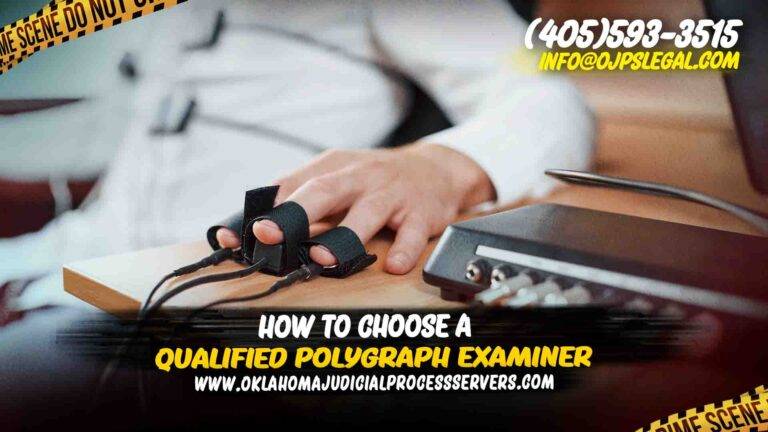
Selecting a polygraph examiner may be critical when an examination could impact a relationship, investigation, employment issue, or dispute. An experienced polygraph examiner is responsible for more than attaching sensors and “reading” the answers. The polygraph examiner preps the examinee, writes the questions, administers the test, assesses the readings,s and interprets the results.
This is why it’s wise to look for Lie Detector Test Oklahoma City providers. Examiners differ when it comes to education, licensing, experience, and professional training. The same is true when you’re comparing a Lie Detector Test OKC provider to an examiner in the Tulsa area. You would want to check the credentials of a Lie Detector Test Tulsa or a Lie Detector Test Tulsa Ok.
A licensed examiner can describe training, experience, procedures, fees, privacy policies, and reporting procedures. They should explain what a polygraph can do and what it can’t do. This article describes what you should check before selecting an examiner.
Check Licensing and Formal Training
Begin by finding out if the examiner is officially licensed in the location where the examination will take place. Licensing laws for polygraph examiners differ from state to state. In Oklahoma, examiners must be licensed according to state law. State laws require approved training, internship, and testing for competence. Language training also needs to become a top priority.
Simply owning a polygraph is not a qualification for an individual to perform professional testing. Professional instruction includes the art of the interview, question formation, examination techniques, chart analysis, ethics, and report writing. Find out where the examiner took their basic training, and whether that course is certified. You might also ask if the examiner has taken additional courses in their subject.
Understand Certification, Membership, and Experience
Training, license, certification, and membership do not mean the same thing. Inquire about the certifying body and what that certification means. Experience counts, too. Inquire about how long the examiner has been examining, how many they do, and, most of all, whether they have been doing the type of exam you need.
A competent examiner in certain-incident testing may have a very different background than a person involved mainly in screening. However, knowing the number of years as a professional that is “appropriate” is less important than knowing that experience matches your needs. Ask about the way the examiner updates his or her professional knowledge.
Evaluate the Examination Process
Request the examiner to walk you through the entire test, step by step. A professional test often involves a pre-test interview prior to the placement of sensors. In the interview, the examiner receives information about the purpose of the test and the problem being investigated. You should review questions prior to testing so that the subject will understand their meaning.
Pay attention to the quality of questions. A good question will show a particular problem and not create more confusion. If your sister borrows money, a question about the money is an example of a good question. Do you know whether the examiner’s Method A or Method B requires the analysis to be tested?
You don’t have to be an expert, but you should be told how the test is generally performed. The examiner should describe what the machine is measuring.
Ask About Equipment, Analysis, and Reporting
Prepare the equipment before an examination. Inquire which system the examiner uses and how they monitor its operation. Inquire how the recorded data is understood. An experienced examiner should not refer to the machine as making an automatic truth-or-lie decision. The response patterns are understood within the context of the testing method and the study circumstances.
Reporting is also a problem. Inquire about whether you get a written report and what information it covers. Also, check whether the report describes how the test was done, the questions asked, and the conclusion. Inquire about what occurs if the report does not show a conclusive result.
Check Ethics, Neutrality, and Privacy
Why does neutrality matter? Polygraph tests can be emotional. The person asking for a polygraph test might have already decided the target is dishonest. Even in this case, the examiner ought to conduct the tests impartially and avoid promising any particular results. Watch out when the examiner says their device is infallible or guarantees a guilty or innocent verdict.
Physiological reactions can stem from various sources – anxiety, fear, pain, and emotional distress are common. Privacy needs consideration as well. Examiners may come across comments from the test taker about issues such as relationships, money, conflict at work, and other inquiries into personal affairs. Find out who will have access to the results, whether the results are stored, and how the reports are stored.
Read Reviews, Then Verify Credentials
You can learn about a client’s experience through online reviews. Try to get the same feedback on various reviews concerning communication, professionalism, punctuality, privacy, and clarity. Reviews are never a substitute for credential checks. Hearing a client say the examiner is thorough doesn’t mean he or she is qualified.
Inquire about training, credentials, whether they belong to a professional organization, and what kinds of tests they administer. Be wary of advertising or test reports that assert “guaranteed” accuracy. While there are acknowledged limitations to polygraph testing, no professional should offer a “guaranteed” or error-free test. Read reviews to learn about the quality of the service and verify credentials to learn about professionalism.
Ask About Pricing and Extra Services
The cost should be brought up as part of your exploration into the examiner. Find out if the fee includes the pre-test interview, the testing, the analysis, the written report, and the explanation. Inquire if there will be a travel fee if the examiner comes to your location. Ask if there is an extra fee for rush jobs, multiple clients, long-distance travel, or having to do additional reporting.
A higher fee does not necessarily equate to a better test. A lower fee does not necessarily equate to poor service. Compare the whole service rather than the headline price. Two examiners can quote different prices for different levels of preparation and reporting.
Match the Examiner to Your Situation
Consider the significance of the matter to you in selecting an examiner. It might be an interpersonal dispute between private individuals, not a focused-incident investigation. The issue may arise at work, which means there is a larger legal context. Consider whether the examination will be a complex investigation that involves an investigator or an attorney.
Describe the dilemma for the first appointment. When that problem is essentially vague or hard to describe, the examiner should inform you fairly rather than try to fit it into a questionable test. That professional’s judgment might prevent you from paying for a test that doesn’t address your real concern.
Be Careful With Legal and Workplace Matters
In cases involving a live legal matter, discuss with an attorney about legal strategy and questions of evidence. An examiner can provide details about the test, but cannot substitute for an attorney. For workplace tests, one must be more cautious. Federal law severely limits restrictions on private employers seeking or requiring employees to take lie detector tests, with limited exceptions.
Know the limits. An examiner must be aware of the limits within which they operate. An employer should seek legal advice where required before testing. Just because an examiner is prepared to carry out a test does not make the request lawful or the evidence admissible.
Ask About Quality Control and Professional Development
Checking on the quality control measures of an examiner can tell you a lot about their professional practices. Do they have peer review for reports or examinations? How does the examiner address equipment malfunctions or questionable charts?
Many professional and investigative organizations incorporate measures for quality control, standardization, and consistency in reporting by requiring some form of additional review. Continuing education also provides another useful clue.
Observe the Examiner’s Communication Skills
In your first chat with the examiner, the examiner should be enthusiastic, friendly, and answer you directly. They should be happy to explain anything you don’t understand and give you practical facts about the accuracy and limits. They should also inform you of what they need for the appointment.
Verify Credentials and Ask for Documentation
A website biography is not sufficient. Ask the examiner for the required information to verify their current licensing and other requirements for professional training. Licensing for the state of Oklahoma is through the state. Ask the examiner for their license number and verify it through the licensing body rather than blindly trusting the claim that someone has the certification without explanation.
You may inquire about any professional memberships and where you trained. If the examiner claims to have been accredited by an organization, it is best to double-check that with the organization.
Final Thoughts
A responsible polygraph examiner. When looking for a good polygraph examiner, people should do their homework and make sure that the examiner is qualified. They should check the licensing, training, and school attended by the examiner, as well as experience, professional affiliations, continuing education, the polygraph techniques used, and other factors.
Never select an examiner just because they can give you the results you are hoping for. Find an examiner who will be truthful about the process. Whether you are looking to make a Lie Detector Test Oklahoma City booking, finding a Lie Detector Test Oklahoma City company, or trying to find a Lie Detector Test Tulsa or Lie Detector Test Tulsa Ok company, ensure you get the right information.
Ask good questions, check credentials, know the fee, talk about how they do the test, and the reporting of the results. The right polygraph examiner will not hide anything. It should make all the difference for you in knowing what is happening, so you can go into testing with reasonable expectations.
Frequently Asked Questions
How to be a certified polygraph examiner?
When it comes to the career of a polygraph examiner, you’ll want to follow your progression of learning and experience, and fulfill the licensing and qualification standards of where you want to work or find employment. Licensure and certification for polygraph examiners depend on the state, organization, and polygraph category.
The state mandates that any individual who is functioning as a polygraph examiner must secure the correct license. The governor states that qualifications for licenses include completing an approved polygraph examiner course, earning a polygraph examiner license, completing a minimum of six months of internship training, and achieving a competency examination.
The other requirement is education. As a rule, Oklahoma will accept a bachelor’s degree from a properly accredited college or university. It does have a special route in Oklahoma that combines investigative experience with other qualifications.
Another option for prospective examiners is to attend an accredited professional polygraph training course. Accredited training schools can teach a standardized course in examination procedures, question formulation, chart analysis, and professional ethics.
How long does it take to become a certified polygraph examiner?
The path to becoming a practicing examiner has no restrictions limiting you to classroom training alone. Oklahoma is an excellent example. The state’s licensing criteria stipulate that applicants must have graduated from a polygraph examiner course approved by the Board and undergone a minimum of six months’ internship training prior to meeting the licensing prerequisites.
The first training course can vary in length depending on the school and program. Once you receive training, you have to build experience next. There may be different education and experience requirements placed on various categories of membership by professional organizations.
Conditions for professional membership may involve years of practice, courses passed, ongoing studies, and qualifications before moving up to higher membership levels. Hence, the time to become a professional examiner can be considerably longer than attending the training course.
How much does it cost to become a polygraph examiner?
There is no one-size-fits-all worldwide cost. It could incorporate coach tuition at an identified mentoring school, travel, lodging, examination supplies, equipment, license charges, association dues, and continuing education. Coach tuition may fluctuate from time to time. One, because we already mentioned a whole lot of these, it is also worth separating the charge of the training from the licensing expense.
In other states, such as Oklahoma, the state’s regulatory authority manages polygraph examiner licensing. The licensing procedure contains prerequisites that go beyond a fee-based application procedure, with accepted education, internship experience, and accreditation examinations. To best approximate the overall cost, contact the license provider you intend to utilize for a current price listing.
How much money do polygraph examiners make?
You earn more if you practice in a metropolitan area, have more years of experience, work for a large or non-profit hospital, or specialize. Also, if you do more exams, work in a state-of-the-art facility, and hold employment or have a private practice.
A private examiner may have a higher income potential than a published examiner, because in private practice, you can bill clients directly for each exam. Business costs, number of exams done, marketing, travel costs, experience, and services offered can all impact what you actually take home. So if you’re considering this career, don’t take published salaries too literally.