
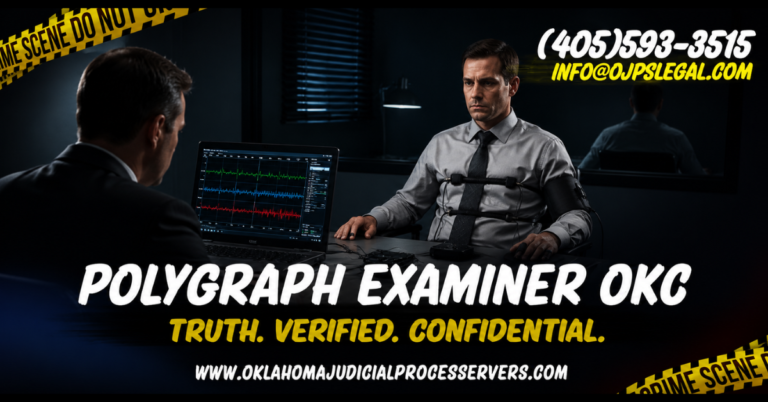
Discovering truth in a relationship, business, or legal issue needs patience. Therefore, you have to ask questions to get the real facts. Sometimes, people feel constant stress to find the truth. But you do not have to lose your peace to know the truth. How? You can take a lie detector test in Tulsa. You can even hire a polygraph examiner to find the truth. So, let us explain these tests and exams so you can choose the right one for your situation.
What Is a Lie Detector Test?
You’ve probably heard about lie detector tests on TV shows or in movies. But have you ever considered how it functions? If not, let us clarify it. So, a lie detector test, or polygraph test, can detect and register someone’s lies on a polygraph machine. This test simultaneously monitors several of the suspect’s physiological functions. These functions involve pulse, breathing, and galvanic skin reaction.
Then, the machine prints out the results on graph paper. The paper shows the exact moment during the questioning period when the biological responses occurred. So, the examiner considers the stress if the most powerful body reaction occurs right when fundamental questions are asked on the graph paper. This tension suggests a lie.
How Does a Polygraph Exam Work?
In a polygraph or lie detector test, the subject has sensors on their body. These sensors measure four main features: breathing, skin conductivity, blood pressure, and cardiovascular activity.
So, examiners measure these functions for differences when a subject lies. This signals the brain’s stress reaction. The polygraph machine then registers those changes in real time. This gives the examiner a visual record for analysis.
Licensed polygraph examiners carefully study these patterns. These examiners make comparisons of responses. The comparison occurs between control questions (with general answers) and queries appropriate to the research. Thus, the examiner forms a conclusion based on differences in physiological reactions to these types of questions.
What Is a Polygraph Examiner?
A polygraph machine works like a thermometer. This machine records physiological data, but it does not explain the reason behind responses. Therefore, a polygraph machine needs a polygraph examiner. This examiner interprets the readings.
So, a certified polygraph examiner in Tulsa will ask straightforward, honest, and focused questions. They will adhere to one subject at a time instead of collecting on multiple charges.
The examiner will also create an environment where the examinee feels comfortable disclosing what is on their mind. They will compare responses across different kinds of questions to determine patterns. These experts will analyze the charts using training and validated methods.
Why Do These Examiners Matter?
A good examiner matters because they can find clear answers. On the other hand, a poorly trained examiner can cause real problems. They may ask vague questions that can fail a truthful examinee.
Also, a poorly trained examiner might test multiple issues at once. They may choose infidelity, theft, and drug use issues that decrease accuracy. Moreover, these untrained examiners may not understand the correct method for reading charts. They might label a truthful person as deceptive or vice versa.
Impact of a Poorly Run Polygraph
The impact of a poorly run polygraph can become serious. For example, an examiner may mishandle a test and negatively affect job applicants. Applicants for federal law enforcement may lose out on careers. Also, a poor test may unfairly judge a criminal suspect, even when they tell the truth. An unskilled examiner can increase conflict for private individuals, such as spouses or family members.
What To Know Before the Lie Detector Test?
You must prepare thoroughly for the lie detector test. The process begins when the examiner conducts a pre-test interview with the subject. This happens before attaching the sensors and asking any questions.
During this interview, the examiner informs the subject about every question they will ask during the actual exam. This discussion ensures that no question comes as a surprise. However, this transparency is a professional standard. It helps ensure accurate results.
Further, the examiner gathers some background information during the pre-test phase. This is necessary because physiological readings can vary based on medical history. Readings may vary due to current medications, recent sleep, and emotional state. Some diseases may also affect the results. The examinee should report any illness before the test.
Types of Questions Asked in Polygraph Exam
A person may feel anxious about the questions the examiner has lined up for the test. They may feel so even after the examiner has conducted the preliminary interviews. However, the interview will give an idea about the polygraph topic. It will not disclose the exact questions until the D-date. Fortunately, you can make an intelligent guess and know a series of questions in various lie detector tests. These queries broadly fall into the following categories:
General Questions
Most polygraph exams begin with general questions. These questions make the defendant comfortable in the examination room. They allow the defendant to counter-check specific facts gathered during the pre-test interviews.
For example, an examiner may ask about the examinee’s choices or habits. This helps confirm the examinee’s identity and credibility, particularly if they have shared this information. Moreover, general questions may further include personal and professional queries.
An examiner may ask the defendant about their workplace. For example, the examiner may ask whether the examinee robbed their former workplace. This question is valid if the examinee was involved in the robbery or accused of it.
Relevant Questions
These questions are most important, as no polygraph question should go beyond the topic. So, related questions are more appropriately called case-related questions. These questions target the core of the interview. They provide invaluable clues on whether the defendant had a direct involvement in the matter under investigation.
Irrelevant Questions
Most polygraph examiners will naturally develop unease after asking a series of case-related queries. They do so through irrelevant questions. These questions pose the least risk of self-incrimination. Moreover, irrelevant questions allow the defendant to revert to their psychological baselines. They help the examinee to prevent false negatives.
Control Questions
Examiners employ control questions to gauge varying levels of salience. They ask questions related to the test issue. However, control questions do not exactly cover the test issue. For example, an examiner can ask the relevant question – “Did you blackmail Mr. D?” In that case, the control questions would become – “Are you the kind of person who would blackmail Mr. D?”
Accuracy of Lie Detector Test
Most people want to know the accuracy of the answers to questions asked during a lie detector test. So, research published by the American Polygraph Association shows that polygraph tests have 80-90 percent accuracy. This happens when a trained and licensed examiner conducts the test.
These trainers also use scientifically and academically recognized techniques to conduct the exam. These techniques influence the exam accuracy. So, the 80-90 percent accuracy range depends on the examiner’s ability and technique. It also depends on the subject’s physical & mental condition.
Moreover, you should know that a polygraph test would never give 100 percent accurate results. Credible examiners derive results from physiological data. They give their results professionally as an opinion.
Factors Influencing Accuracy
Several factors can decrease the accuracy of a lie detector test. For example, the graph may show abnormal physiological patterns. This may happen in subjects with some neurological conditions.
Also, the lie detector machine may have less effect on subjects taking a specific medication. These medications often include sedatives or beta-blockers. Moreover, some subjects may engage in controlled breathing techniques. This method can interfere with their respiratory system. Thus, the accuracy of a lie detector test would vary.
Use of Polygraph Examination in Pre-Employment Screenings
Polygraph or lie detection exams can help employers verify the honesty of potential applicants. Therefore, you should know about the use of a polygraph examiner in Tulsa.
Enhanced Screening
The test allows employers to identify applicants who may not be truthful during the hiring process about their background history. It can increase disclosure of information that often goes missing during the background process. Thus, the test can assist in a hiring decision, indicate that an applicant needs further investigation before hiring, or disqualify them.
Better Security
The polygraph test can reduce the risk of hiring individuals who might threaten the workplace or community. It can detect undisclosed employment history or illegal acts.
Upholding Integrity
The test shows dedication to the communities the agency serves. It ensures employers recruit only top-tier candidates who serve their communities.
Polygraph Test for a Government Position
You should know the rules if you need to take a polygraph test for a government position.
Follow Your Routine
Many applicants worry that something like caffeine will hinder their performance on the polygraph. But applicants should know that they should not skip coffee only on test day. This can affect the polygraph test results. The same goes for prescription medications. You should not discontinue your medication for your security clearance polygraph if you take it daily. Moreover, you should advise your agency about pre-existing medical conditions before the polygraph.
Do Not Overthink
The polygraph examination consists primarily of yes-or-no questions. So, the impact of test results would vary if you are a doubtful person. A doubtful person would overthink every question, which can impact the overall result.
Do Not Overshare
You should not respond if, at any time during the polygraph, the examiner asks you to speculate in your response. This test does not ask you to dazzle your examiner with your savvy and finesse. For example, you can say you do not know about something you do not need to answer.
Do Not Try to Beat the Polygraph
The examiner may ask you if you have prepared for the exam or spoken with others about it. Therefore, you should avoid asking other applicants about the polygraph test. You should avoid controlling your breath, as a professional polygraph examiner can detect this.
Can You Do a Polygraph Infidelity Test?
Intimate relationships can raise suspicion on various grounds. It may provoke denial or defensiveness, with conversations taking a full circle. In such situations, a partner may go for a polygraph test.
The test can help a couple work through relationship issues. This exam can give a structured and science-based framework to cope with allegations of infidelity. So, you can go for a polygraph test if you have circumstantial evidence of infidelity. The test can help if one partner wants to confirm or deny specific contentions.
A polygraph test can also help if one partner broke trust. This can help couples who seek clarity before committing long-term or reconciling. Lastly, partners with delusional beliefs about their spouse’s unfaithfulness often go for a polygraph infidelity test.
Examiner Experience Importance
Infidelity and domestic issues testing falls into the most challenging categories in lie detection. These tests have high emotional friction. Therefore, the need for experienced polygraph examiners increases.
These examiners have significant experience with domestic issue testing. They test with time-tested methods developed through years of practice and research. Moreover, a formally trained polygraph examiner will follow ethical and scientific test protocols. They will word each question carefully in a respectful, unchallenging tone.
Conclusion – Get Answers with Oklahoma Judicial Process Servers
Need answers for difficult questions? Then trust Oklahoma Judicial Process Servers. We conduct a lie detection test in Tulsa. Our experts use advanced technology to do so. We provide investigative support through our tests.
Consult our polygraph examiner in Tulsa to get genuine answers. Moreover, our experts show sensitivity in personal situations. We treat every single person with complete privacy. Trust us for fast, dependable answers. We can help you take back your life’s control with the plain truth.
Our experts have the knowledge to conduct tests with the utmost dignity. We can help with personal matters, litigation, or employment cases. Therefore, trust our confidential investigative services.